
Mini Golf Themes & Concepts — choosing the right story for your course
A mini golf course is a spatial narrative. The theme decides what guests photograph, how long they stay, what they tell their friends, and how often they come back. This guide walks through the major thematic directions used in commercial mini golf — adventure, pirate, jungle, heritage, glow-in-the-dark and sport-led — and how to pick the one that fits your site, audience and brand.
Why theme matters more than people expect
A bare, well-built mini golf course plays fine. A themed mini golf course gets posted on Instagram, talked about by guests, and remembered by repeat visitors. In commercial mini golf the theme is not decoration — it is the product. It drives footfall, photography, average dwell time and how the venue is described in reviews.
Theme also sets operational expectations. A pirate course implies costumed birthday parties; a heritage course implies adult evening play; a glow-in-the-dark course implies after-dark hours. The brief you give your designer should start with the experience you want guests to have, not the obstacles you want on the holes.
Theme is the single biggest lever you have for differentiating one mini golf course from another. Two courses with identical layouts can attract entirely different audiences depending on how they're themed.
Popular mini golf themes and what they do
These are the thematic directions we see most often in Indian commercial mini golf, with the audience and operating context each one tends to suit.
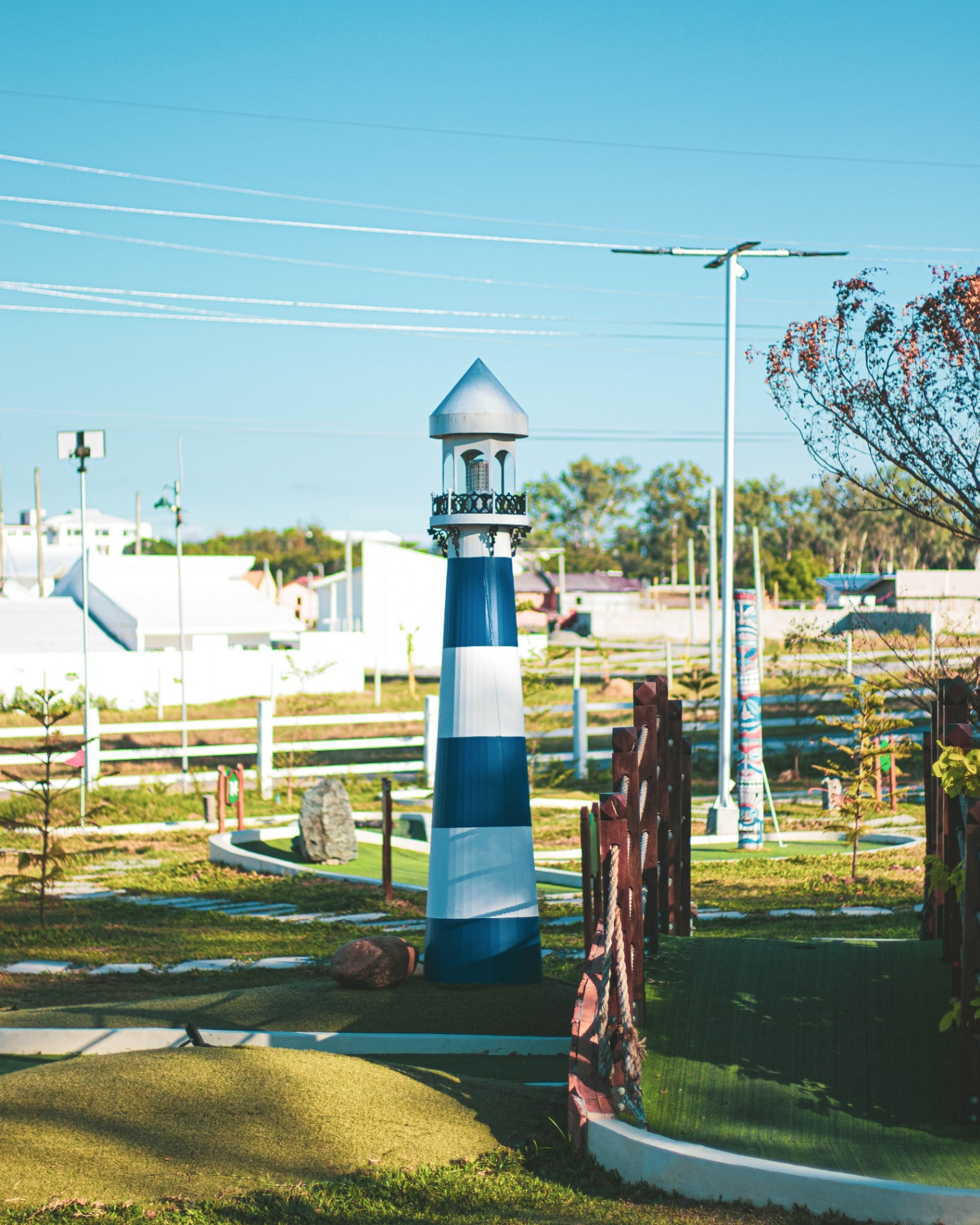
- Adventure / TropicalLagoons, waterfalls, palms, rope bridges, lighthouse markers. The classic resort and FEC theme — broadly photogenic, family-friendly, works indoors or outdoors, and pairs well with food & beverage.
- PirateGalleon hulls, treasure chests, plank bridges, sea monsters. Strong with families and children; high event-and-birthday-party value; visual language is instantly readable in marketing photos.
- Jungle / SafariDense planting, animal silhouettes, ruins, cave passages. A strong outdoor and resort fit. Encourages a slower, immersive round and pairs naturally with landscape budget already on site.
- Heritage / CulturalLocal architectural motifs, regional craft, courtyard layouts. Distinctive in markets where every other course is generic — well suited to boutique hotels, cultural districts and city-centre installations.
- Glow-in-the-dark / NeonUV-reactive paint, blacklights, fluorescent obstacles, optional indoor-only. Drives after-dark hours, college and date-night traffic, and ticketed-event programming.
- Sport / Putt-PuttClean, technical, low ornament — sloped greens, real contour, fast surfaces. The right pick when the audience is players, not party-goers; suits putting-course resorts and clubhouse installations.
- Fantasy / Story-ledCastles, dragons, enchanted forests, narrative signage between holes. High visual impact and strong with children; needs more theming budget and longer creative development than other directions.
- Futuristic / Sci-fiGeometric obstacles, LED lighting, metallic finishes. Pairs well with arcades and modern FECs; reads younger and more urban; works almost exclusively indoors.
Indoor vs outdoor — which themes work where
Not every theme is equally suited to every format. Outdoor courses benefit from themes that lean into landscape, weather and natural materials; indoor courses benefit from themes that exploit controlled lighting, paint and built structures.
| Theme | Outdoor fit | Indoor fit | Notes |
|---|---|---|---|
| Adventure / Tropical | Excellent | Good | Outdoor uses real planting and water; indoor uses props. |
| Pirate | Very good | Very good | Reads strongly in both formats. |
| Jungle / Safari | Excellent | Fair | Wants real plants and landscape to feel right. |
| Heritage / Cultural | Very good | Very good | Material choice carries the theme either way. |
| Glow / Neon | Poor | Excellent | Needs darkness — indoor only in practice. |
| Sport / Putt-Putt | Excellent | Good | Outdoor reads more like real golf. |
| Fantasy / Story-led | Good | Excellent | Built sets sit better indoors. |
| Futuristic / Sci-fi | Fair | Excellent | Lighting and finishes need indoor control. |
How to pick a theme for your site
The theme decision should be made before hole-by-hole design begins. Choosing late means redesigning obstacles to fit a theme they weren't shaped around — visually weaker, and more expensive.
- Start with the audience, not the aestheticA weekend-family audience and a date-night college audience want very different courses. Define the primary guest first; the theme that fits will narrow itself.
- Match the venue's existing brandResorts already have a brand language. A heritage hotel does not want a neon course; a tropical resort does not want a futuristic one. Theme should extend the venue, not contradict it.
- Be honest about your climate and hoursGlow themes need a dark indoor environment. Outdoor courses in heavy monsoon regions benefit from themes that survive wet seasons visually as well as structurally.
- Check what's already in the marketIf the three nearest mini golf venues are all pirate-themed, that direction is harder to differentiate. Heritage, sport-led and futuristic themes are still under-supplied across most Indian cities.
- Plan for photography from day onePick two or three signature holes early and design them as photographic anchors. Theme that doesn't translate to one strong photo is theme that doesn't market itself.
Custom themes vs template / off-the-shelf themes
Some mini golf vendors offer pre-built theme packages — same pirate ship, same lighthouse, same lagoon, installed across every project. The cost is lower up front. The risk is that your course looks like every other course in that vendor's portfolio, which weakens your visibility.
Custom theming costs more in design time but produces a course that is genuinely site-specific, on-brand and harder for a competitor down the road to copy. For most commercial projects — especially resorts, FECs and corporate campuses — the differentiation is worth the design investment.
If your brand or location is in any way distinctive, custom theming pays back through marketing and repeat visits. Templates make sense for low-budget or interim installations.
Theme & operations — what each one implies day-to-day
Theme shapes operations long after handover. Pick it knowing what it will mean for staffing, hours and maintenance.
- Family / pirate / fantasy themesExpect birthday-party traffic, costumed staff requests, and higher prop wear-and-tear. Plan storage and replacement budget accordingly.
- Adult / heritage / sport themesExpect evening and weekend adult play, lower prop wear, higher F&B attach rates. Lighting and sound brief leans intimate, not energetic.
- Glow / neon themesExpect concentrated evening peaks. UV lighting, paint touch-ups and bulb replacement become recurring maintenance line items.
- Outdoor planted themes (jungle, tropical)Landscape upkeep is part of the operating budget — the theme degrades visibly if the planting isn't maintained.
Frequently Asked Questions
Q01What is the most popular mini golf theme in India?+
Adventure / tropical theming remains the most common direction for Indian commercial mini golf — broadly photogenic, family-friendly, and equally suited to resorts, malls and FECs. Pirate and jungle themes are close behind in family-focused venues.
Q02Can I theme an indoor mini golf course?+
Yes — indoor courses are actually easier to theme heavily, because lighting, paint and built structures are fully under your control. Glow-in-the-dark, fantasy and futuristic themes are particularly well-suited to indoor installations.
Q03Does a themed mini golf course cost much more than a basic one?+
Themed courses cost more in design and props, but the uplift varies widely depending on how built-out the theme is. Light theming (signage, colour, a few signature obstacles) adds modestly; full set-piece theming with custom obstacles on every hole is a larger investment — and usually justified by stronger footfall and marketing.
Q04Can the theme be changed later?+
Surface theming (paint, props, signage) can be refreshed every few years. Structural theming (built obstacles, landscape) is harder to change — it's part of the course. Plan the core theme as a long-term decision and use surface elements for seasonal refreshes.
Q05What's the difference between a theme and a concept?+
A theme is the visual language — pirate, jungle, neon. A concept is how that theme is expressed across the course as a journey: which holes tell which part of the story, how guests move between zones, what they see and photograph. Strong courses have both; weak ones have only the visual layer.