
Outdoor Mini Golf
Course Design & Construction
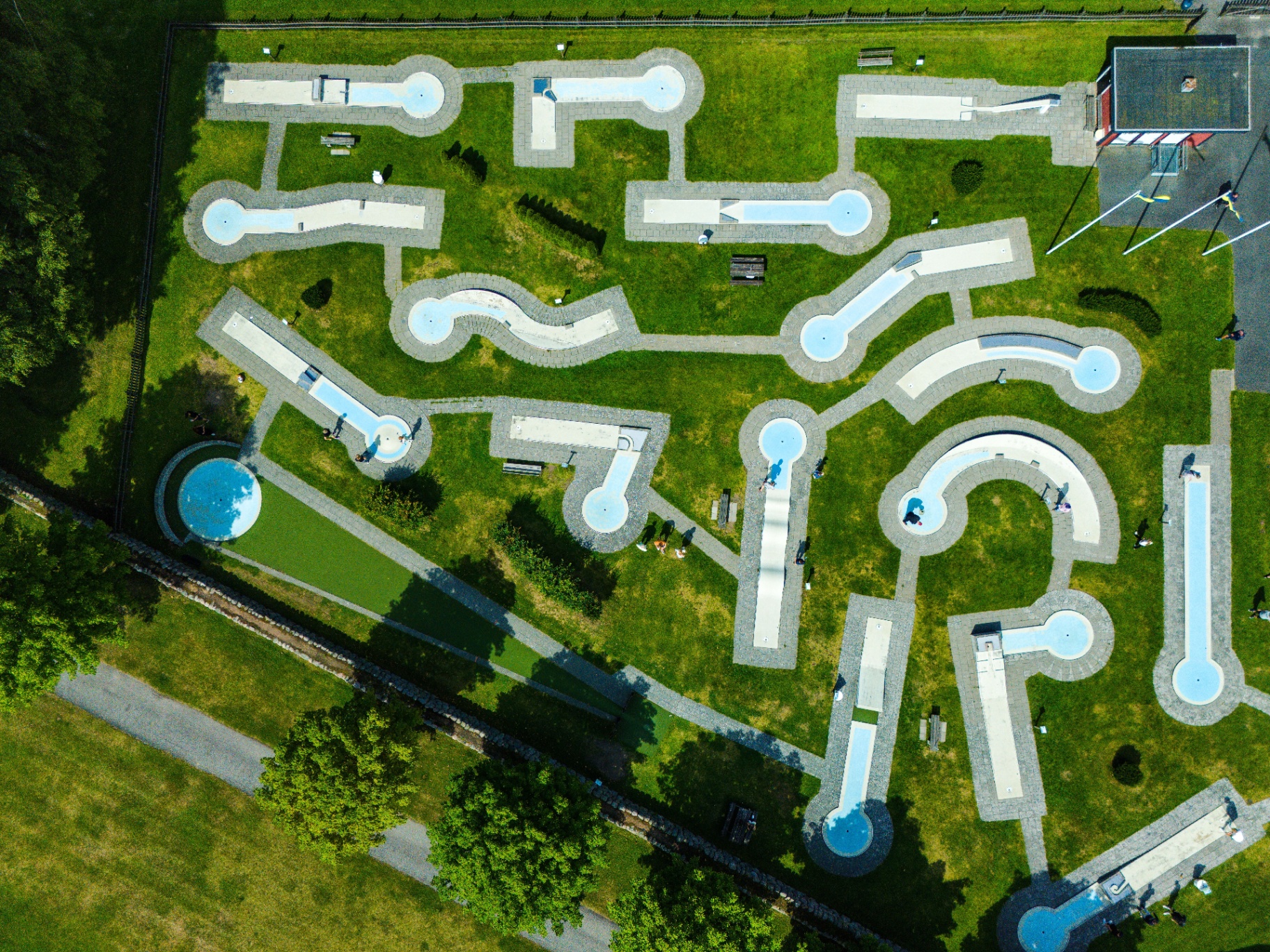
Outdoor mini golf is the most common course format in the world, and for good reason — it makes the most of open land, integrates naturally into resort and club landscaping, and can be built at almost any scale, from a compact 9-hole course to a sprawling themed layout spread over an acre.
But outdoor also means exposure: monsoon rain, summer heat, humidity, and UV degradation all take a toll on a course that wasn't engineered for Indian conditions specifically. Mini Golf India accounts for that exposure from day one — not retrofitted in after a course starts failing in its first monsoon.
Why Outdoor Construction in India Needs Specific Engineering
A surprising number of outdoor mini golf installations in India develop problems within a year or two — waterlogging after rain, surface shifting, turf degradation, or drainage that simply wasn't designed for monsoon volumes. Almost none of these failures are caused by bad materials on their own. They're caused by base preparation and drainage planning that wasn't built for the climate the course actually sits in.
Grading & Sloping
Subtle inclines across putting surfaces and surrounds direct water toward drainage points instead of letting it pool on the play surface — designed in at layout stage, not added afterward.
Sub-Base Drainage Infrastructure
Permeable underlayers and drainage channels let rainwater pass through quickly instead of collecting on or under the surface — the root cause of long-term turf damage and base shifting.
UV & Heat-Resistant Materials
Surfaces and structural elements that handle sustained summer heat and UV without fading, warping, or going brittle — a real consideration across most of India for several months a year.
Weatherproof Edging & Structure
Edging, obstacles, and themed elements built from materials that don't warp, crack, or degrade under repeated wet-dry cycles through the monsoon.
Post-Monsoon Recovery
A properly drained course should be playable again within hours of rain stopping — not days. One of the most overlooked factors in outdoor planning, and the most important for day-to-day operation.
What Goes Into Outdoor Course Design
Outdoor design is about reading the site and letting its features shape the course — not flattening land to fit a template.
Landscape-Integrated Layout
Outdoor courses benefit from working with the existing landscape rather than flattening it — elevation, trees, and natural features add interest and natural separation between holes.
Visibility & Drive-By Appeal
For resorts, clubs, and roadside properties, an outdoor course with elevation and visual prominence pulls attention from passing traffic in a way a flat layout doesn't.
Water Features & Natural Hazards
Ponds, streams, and water hazards add visual appeal and genuine gameplay difficulty — though they need drainage planning of their own, which is why design and drainage have to happen together.
Planting & Natural Theming
Real planting alongside synthetic surfaces gives outdoor courses a grown-in feel indoor courses can't replicate — especially valuable for resort and hospitality settings.
Flexible Footprint
Outdoor courses don't need a fixed shape. Layouts can curve around structures, trees, or site features — which matters in India where usable open land is often irregular.
Outdoor Mini Golf by Scale
For large themed layouts, see our Adventure Golf page.
Where Outdoor Mini Golf Works Best
Resorts & Hotels
A destination-grade guest amenity integrated into existing grounds.
Residential Communities & Clubs
Recreational amenities with year-round visual appeal, even when not in use.
Parks & Public Leisure
Standalone attractions with broad accessibility for all ages.
Tourist Destinations
Courses designed for visibility and drive-by appeal.
Schools & Campuses
Outdoor recreational space that doubles as an accessible introduction to golf.
Outdoor vs. Indoor — Which Should You Build?
See our Indoor Mini Golf page if a covered or climate-controlled course fits your site better — many resort clients ultimately build both.
Our Outdoor Design & Build Process
Site Assessment
Terrain, drainage patterns, sun exposure, and existing landscape features.
Concept Design
Layout built around the site's natural features rather than against them.
Drainage & Base Engineering
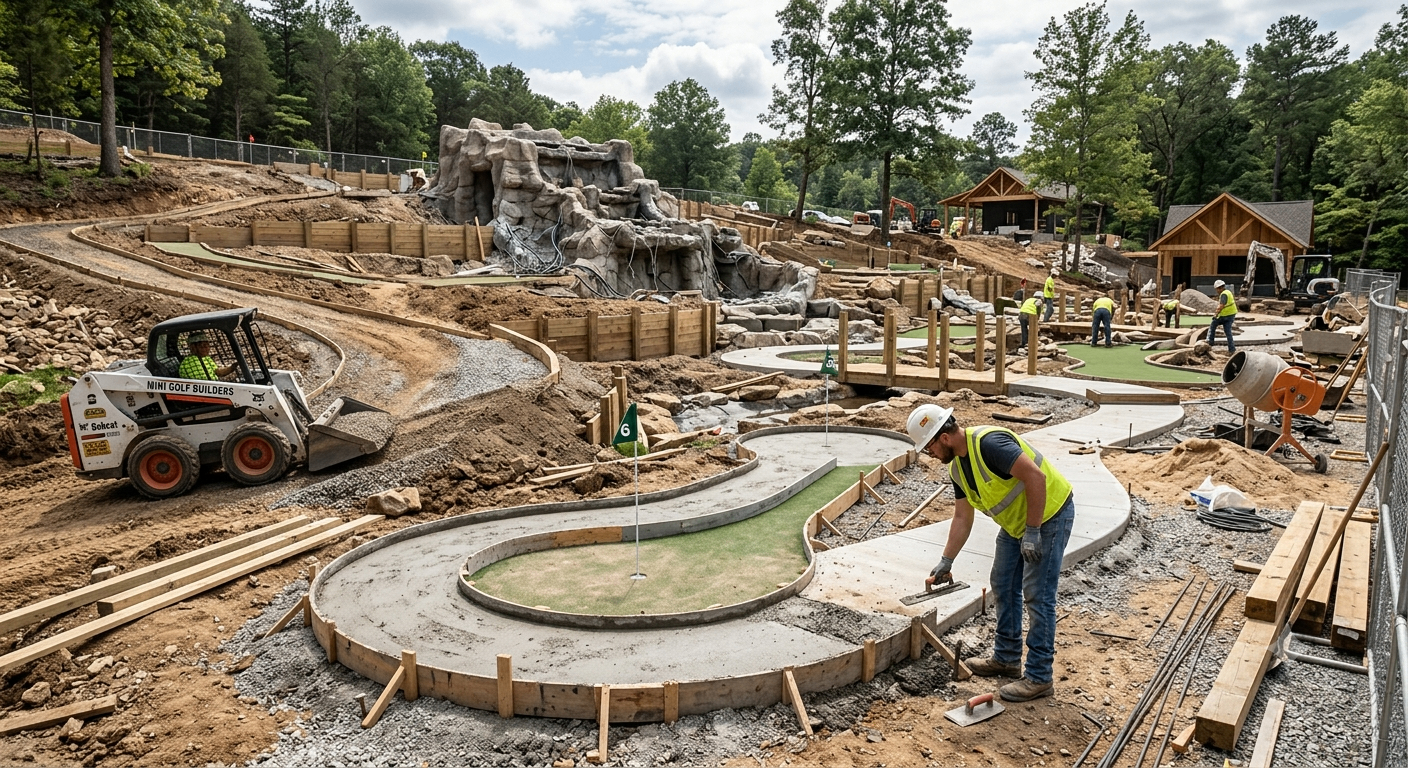
Grading, sub-base, and drainage planning specified before any surface work begins.
Detailed Drawings & BOQ
Full technical documentation for construction.
Construction
Weatherproof materials and structural elements installed to spec.
Landscaping & Beautification
Planting, water features, and finishing touches.
Handover
O&M guidance specific to outdoor upkeep through monsoon and summer seasons.
Why Choose Mini Golf India for Outdoor Projects
Drainage engineered for Indian monsoon
Planned in from day one, not retrofitted after problems appear.
Real golf architecture thinking
Applied to grading, contour, and water management.
Materials chosen for heat & UV
Sustained Indian sun, not generic imported specs.
Landscape-integrated design
Works with your site's natural features rather than flattening them.
Pan-India experience
Including sites with challenging terrain and drainage conditions.
Ready to Build an Outdoor Mini Golf Course?
Talk to our team about your site, terrain, and goals. We'll help you plan a course built to last through Indian seasons.